Jardines verticales
1.0
19.95MB


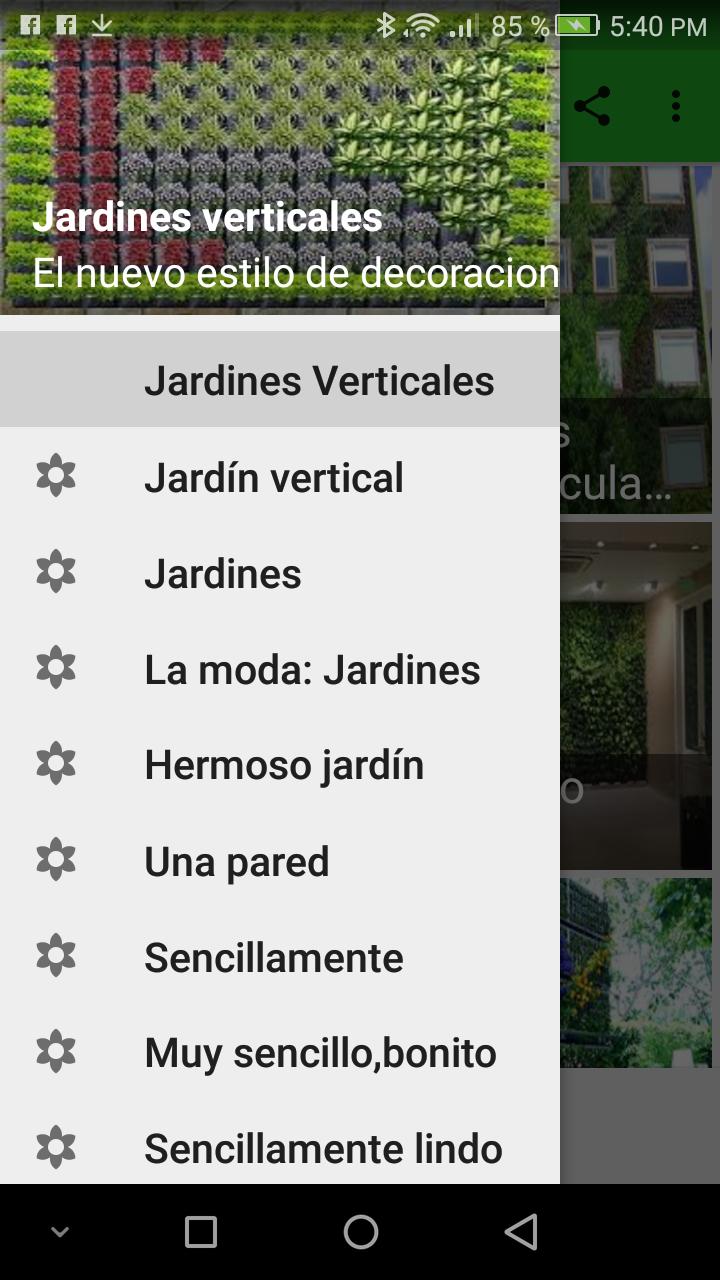
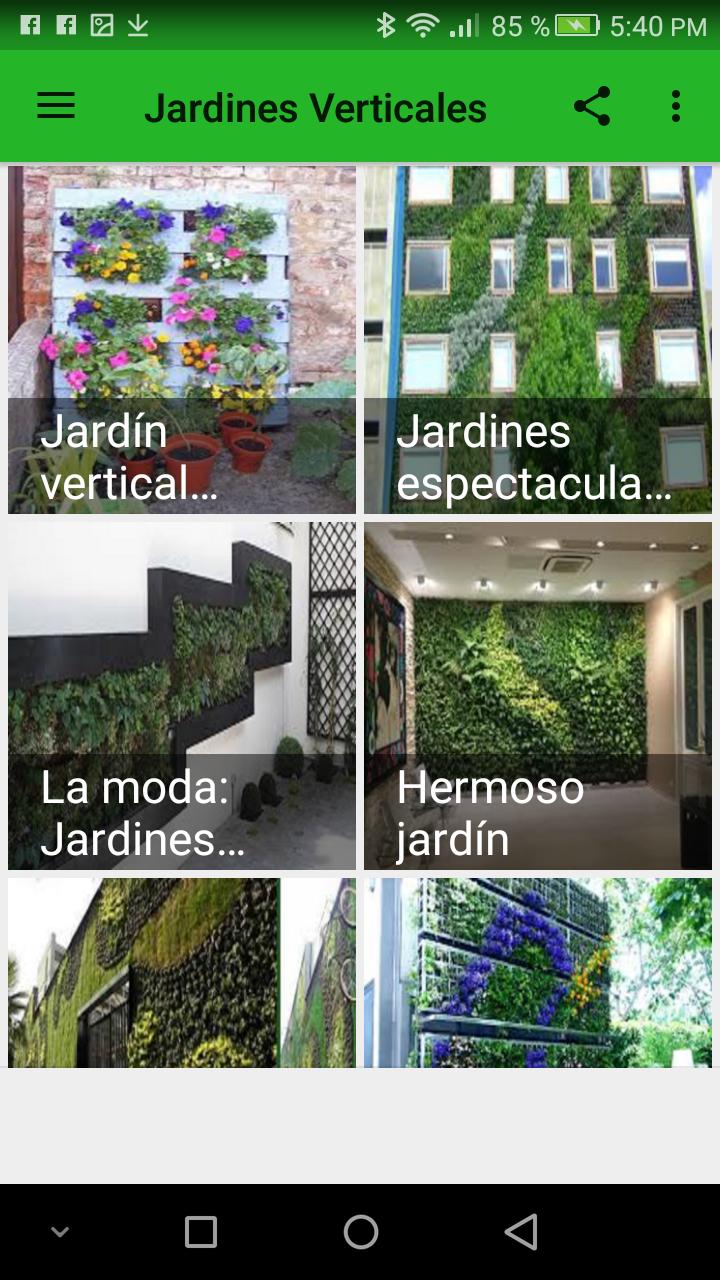
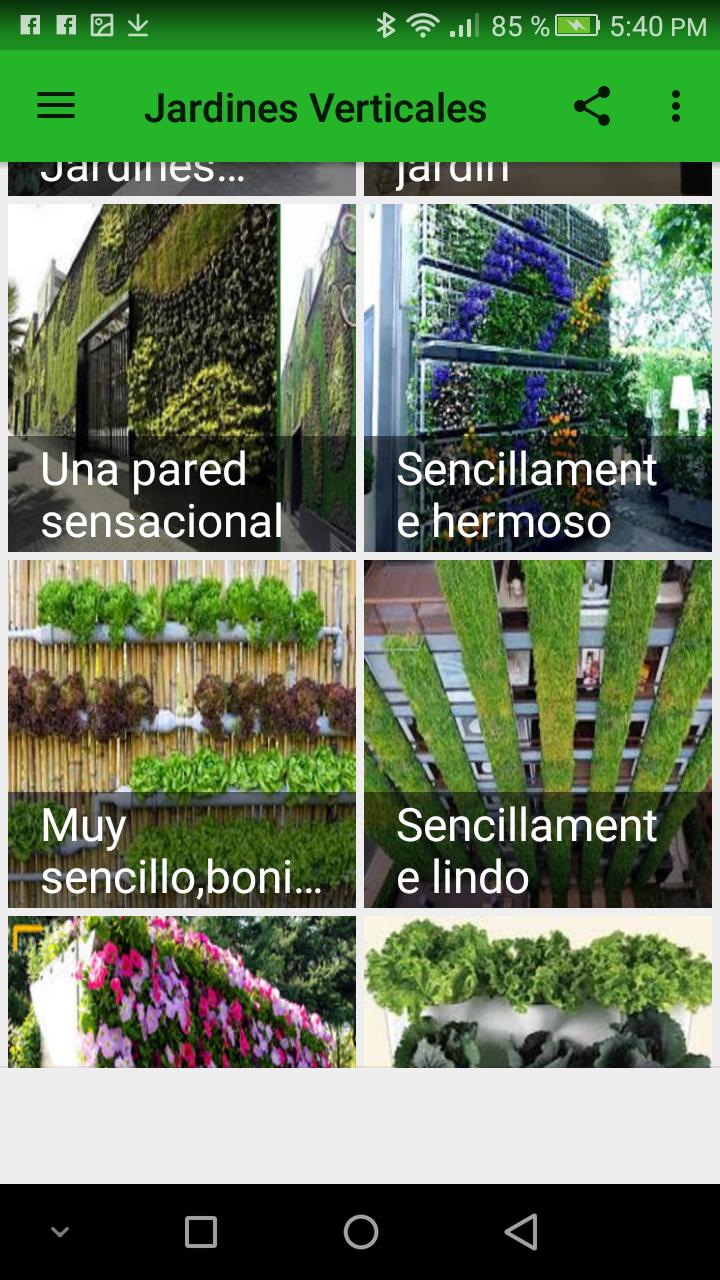
This type of decoration is in vogue. Your Walls Will Look Fabulous
The Jardines verticales ? have they become a trend? Can we see them in hotels? , restaurants, public buildings, housing.
A fashion? that a tendency has become a decade and that for several reasons it has evolved.
A vertical garden consists of? ️ UPLACK WALLS AND FOSTS WITH PLANTS? ? ? They grow without land. One of the objectives of its use is to optimize space in cities?
Its origin has not been a coincidence or fruit of the work of people or companies. Many civilizations and countries? ️ have used it for their multiple benefits throughout history, can we find examples in? ️ Tokyo, America, or Europe.
It should be noted that one of its precursors is currently Patrick Blanc, which has developed and innovated on this issue, becoming one of the referents today.
In this regard, is it in Europe? Where is betting with greater force for Jardines verticales , but every day they arise in our America ?, In our countries you show that the trend begins to generalize.
At present, this type of decoration is part of the culture exceeding mere fashion, in this way France is the first country in the world that adopts legislation of this type, and others are expected to be copied. ”Obligatory that some European capitals such as Copenhagen already have.
With this trend it is pursued that the roofs? ️ In buildings with plants and shrubs, they will help absorb rainwater ⛈️ and reduce runoff, preserve waterproofing, will provide green spaces to urban areas that will facilitate the reduction of the urban effect of “heat island”, due to heat absorption during the day and stored in the numerous concrete and brick Ceramics propitiate, and free it slowly at all times.
We can identify two types of benefits, environmental and health ⚕️.
Environmental benefits:
They reduce the effect of heat island? ️ of large cities.
They provide a type of biological repellent of insects and bacteria,
They enable unused urban spaces.
They reduce up to 5 degrees? ️ The interior temperature of a building in summer, and keep it warm in winter, saving up to € 500/m2 a year.
Health benefits:
Vegetable coverage catches dust and generates oxygen.
A 4 -storey building with a facade carrier of this filter system per year 40 tons of harmful gases and 15 kg of heavy metals. (Darlington, 2001)
It improves performance and reduces discomforts of people who have vegetation in their workplace.
The plant insulator reduces to 10 decibels sound pollution.
This has done nothing but start.
Is it a trend or is it a culture that is pending in today's society?
Interior design is nothing more than a culture, a way of understanding the spaces and new uses, new ways of doing the simplest, most comfortable and attractive.
That is why we present this application, which seeks to encourage the use of unconventional soils and spaces to beautify them and make them useful to combat the smog?, Global warming? and other current problems.
This application is under construction and your suggestions, criticism and proposals will be welcome to achieve a better world.
Download it? And use it in your spaces. Let's build a better world?
















 Download APK(19.95MB)


